What happens in the passage
Story summary
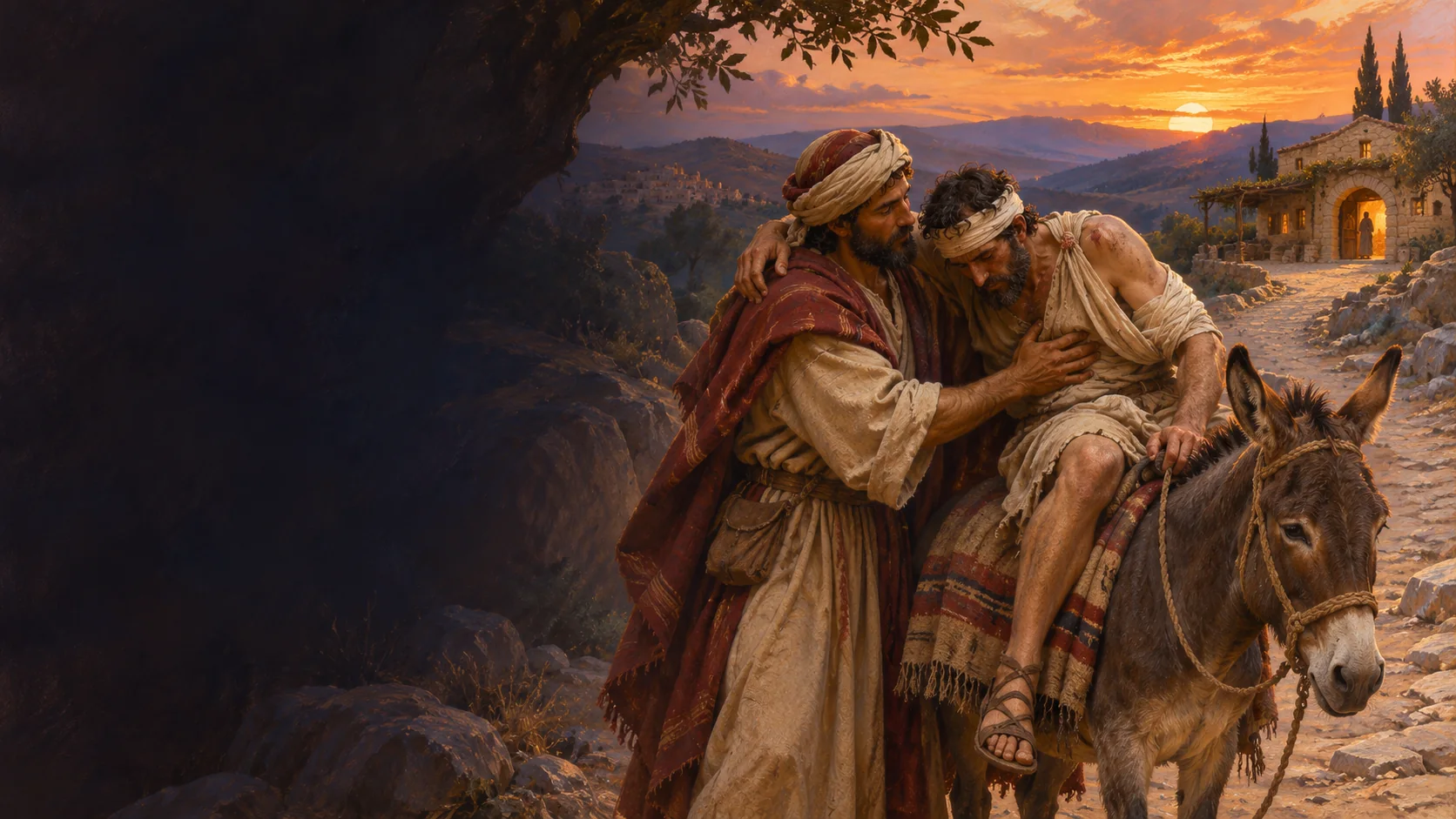
A legal expert asks Jesus what he must do to inherit eternal life and correctly summarizes the law as love for God and neighbor. Wanting to define the limits of that responsibility, he asks, “Who is my neighbor?” Jesus responds with a story about a traveler who is attacked, robbed, and left injured beside the road from Jerusalem to Jericho.
A priest and then a Levite see the wounded man but pass by. A Samaritan—someone the original audience might regard with suspicion—stops, treats the wounds, carries the man to an inn, and pays for his continuing care. Jesus asks which traveler acted as a neighbor. When the expert answers that it was the one who showed mercy, Jesus tells him to go and do likewise.
Moral and ethical guidance
Moral compass
Neighbor-love is measured by merciful action, not by group identity, correct labels, or good intentions.
A practice for the present
Resilience practice
When compassion feels overwhelming, define the next concrete form of care and the limit that makes it sustainable.
The wider spiritual narrative
The larger thread
The parable concentrates the law's call to love into boundary-crossing mercy.
Whose pain have your categories made easier to pass by?
Pause before answering. Notice the first honest response, then name one small action that would embody it.
Your private reflection
Notes on The Good Samaritan
Loading your saved note…